
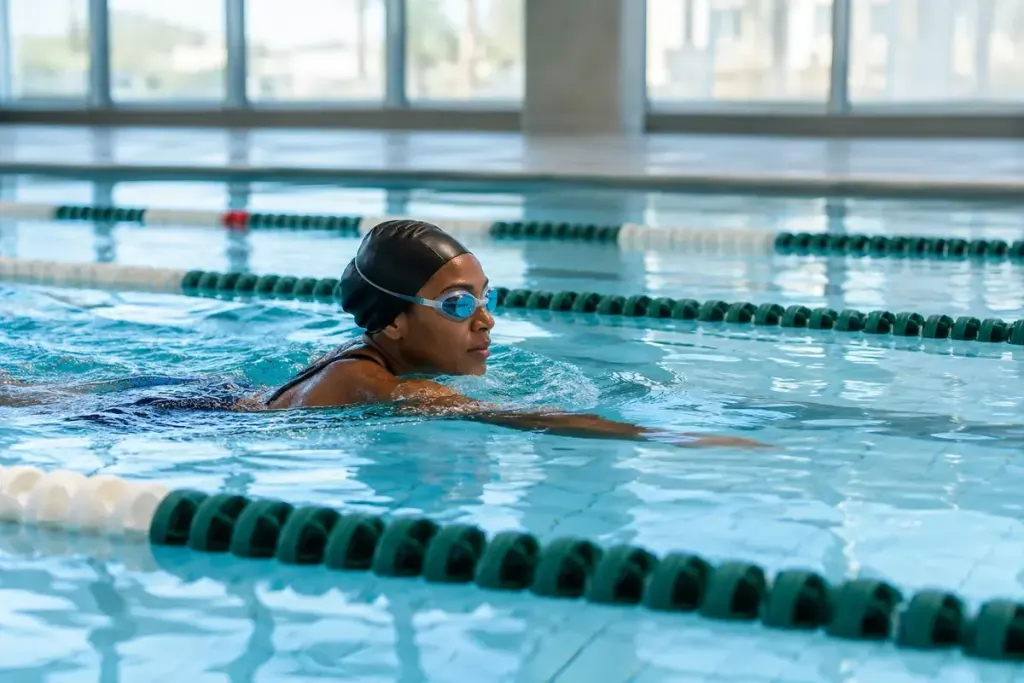
You start in the centre of the lane and finish close to the rope. Swimming harder may not solve the drift. Head movement, hand entry and how you breathe can all influence the direction you travel.
Swim England’s straight-line swimming guidance highlights head alignment and hand entry. These are useful things to observe with a qualified instructor, rather than trying to correct every part of the stroke at once.
Use a reference without staring forward
In a supervised pool, notice the lane marking beneath you while maintaining the comfortable head position your instructor recommends. Constantly lifting the head to look ahead can disturb the stroke. You still need awareness of the wall and other swimmers; a floor line is a reference, not permission to stop paying attention.
Ask someone qualified to watch whether the drift happens throughout the length or mainly when you breathe. That distinction can help narrow the question. A hand entering across the body’s centre line is different from a turn of the head that pulls the rest of the stroke sideways.
Try a short, manageable comparison
Swim an easy length with one agreed cue, then rest and discuss what changed. Keep the pace comfortable enough to notice the movement. Do not add breath-holding challenges or attempt unfamiliar drills without suitable instruction.
A useful note might be “drifted towards the rope after each right-side breath” rather than “bad at swimming straight.” It gives the next lesson something observable to work on. Video can help if the venue permits it and other swimmers’ privacy is protected.
Pool alignment skills do not replace open-water navigation, supervision or safety preparation. Open water lacks the same visual references and introduces different conditions. For now, aim for a calm repeatable length in the pool. A straighter route is often the result of a more consistent movement, not a stronger effort.