Swimming Essentials
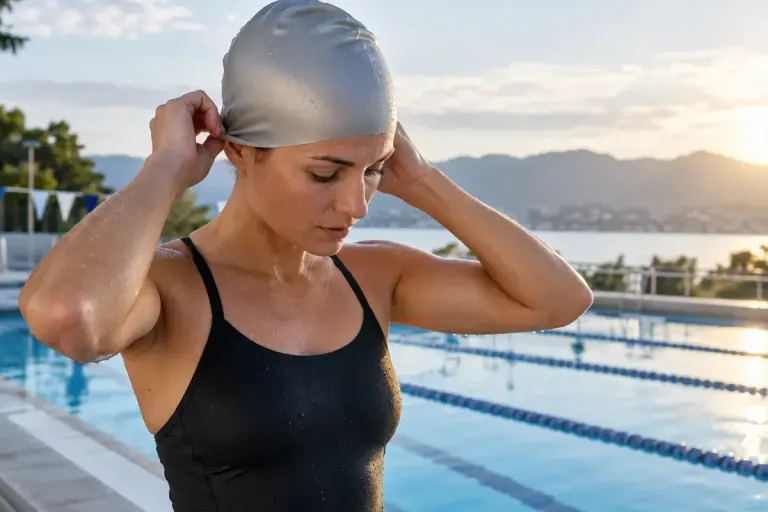
Fit a Swim Cap Gently and Leave Room for Comfort
Put on a swim cap without tugging at hair, check the fit before entering the pool and choose comfort over unnecessary tightness.

Confidence grows one good habit at a time.
Put on a swim cap without tugging at hair, check the fit before entering the pool and choose comfort over unnecessary tightness.
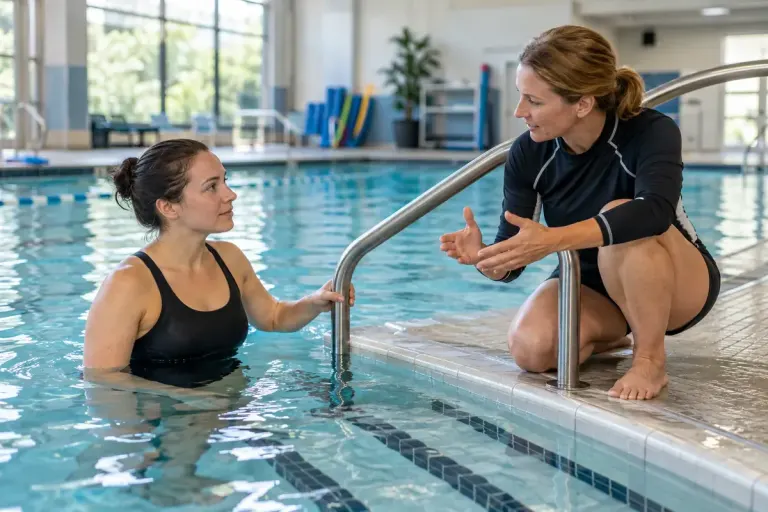
Discuss pool entry with your instructor, including depth, support and access needs, before copying a method used by another swimmer.
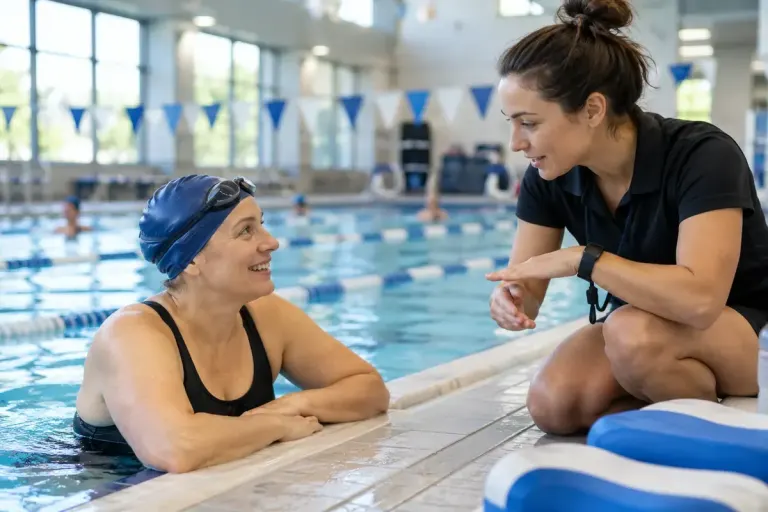
Agree a small, observable goal with your swimming teacher so progress includes confidence, control and safety rather than distance alone.
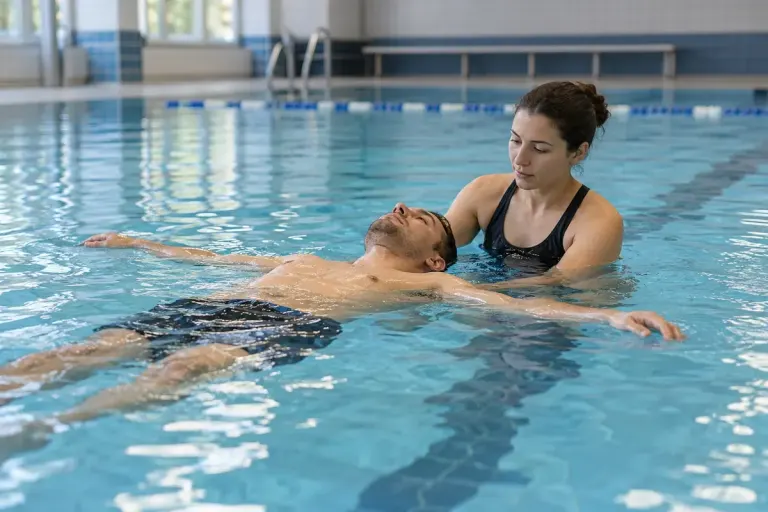
Make front-to-back rotation a supervised lesson goal, with a clear recovery position and support suited to your current swimming confidence.
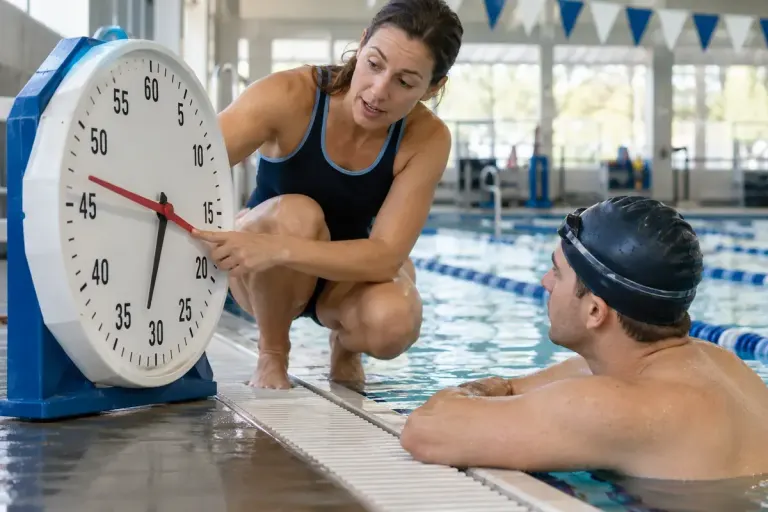
Understand the difference between swim time, rest and a send-off interval before joining a timed pool set, with an easy clock-reading example.
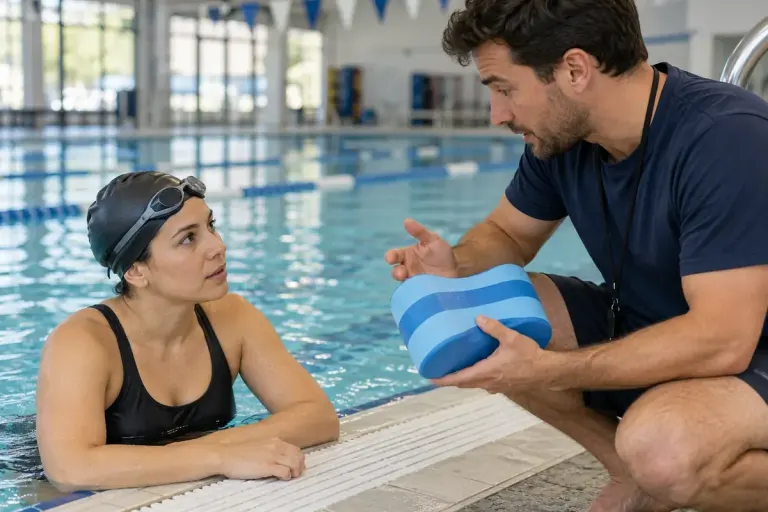
Use a pull buoy for a clear coached swimming purpose, understand what its support changes and never rely on it as rescue or flotation equipment.

Give swimwear a simple after-swim routine based on its care label so it does not remain wet and tightly packed until the next session.
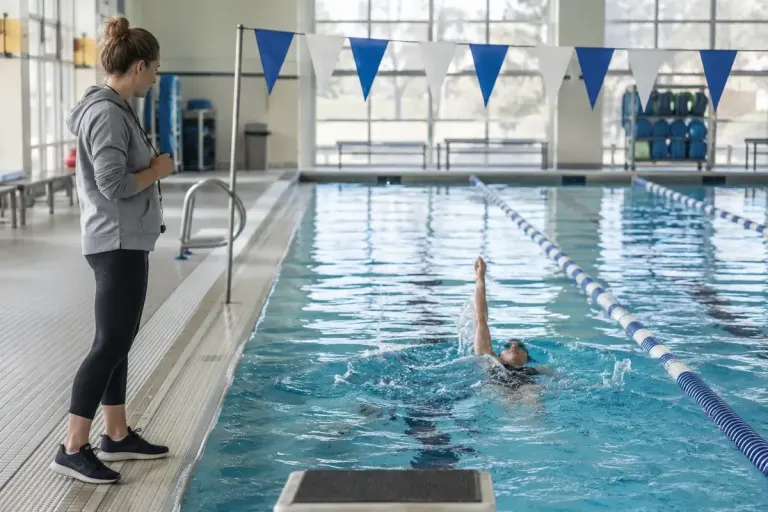
Backstroke flags help swimmers recognise the approach to the wall. Learn the cue with a teacher instead of borrowing someone else’s stroke count.
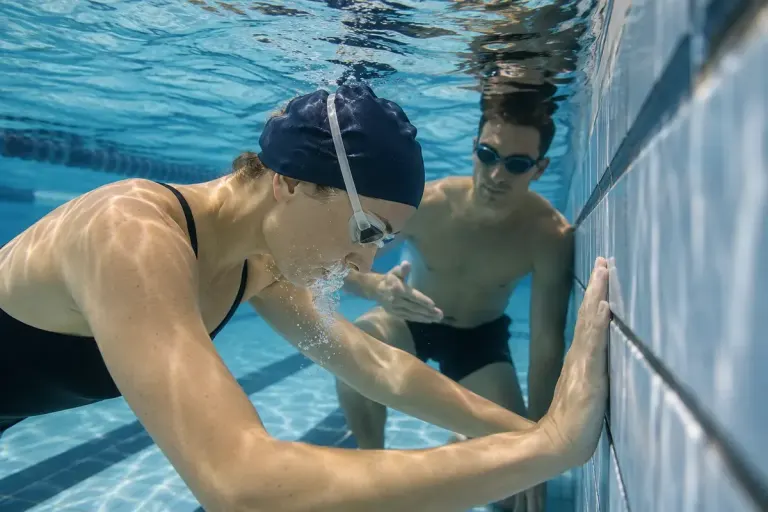
Explore relaxed exhalation during front crawl with a teacher, using short supported practice instead of trying to solve breathing by holding more air.