
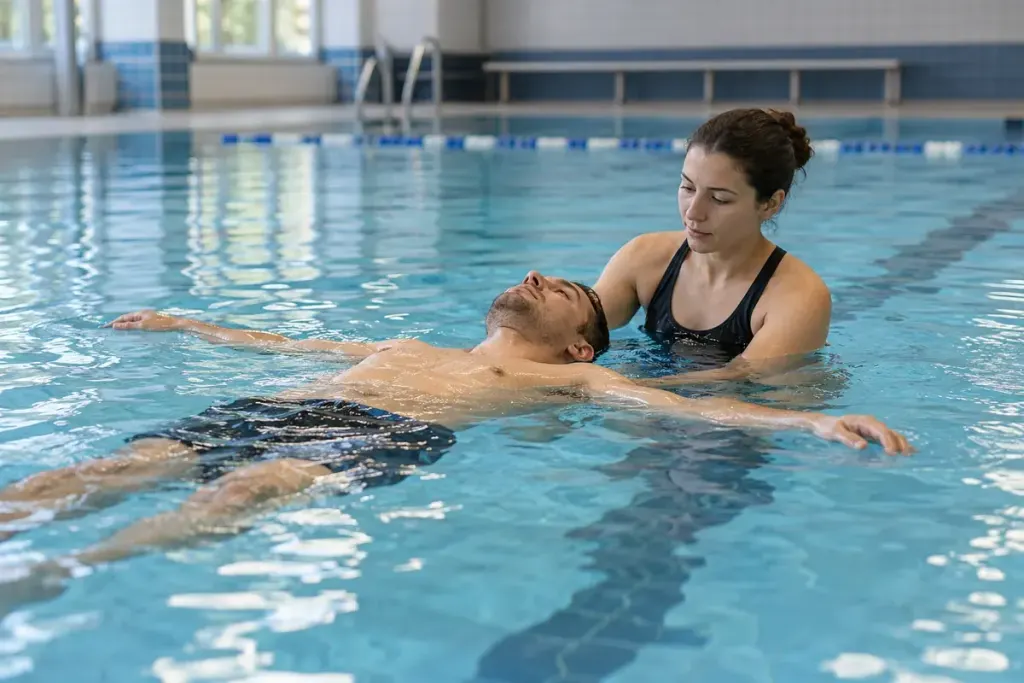
Swimming forward is only one way to become more comfortable in water. Learning to change position, float and regain an upright stance can make a lesson feel more manageable. Ask your teacher to treat those transitions as skills in their own right.
Swim England identifies rotation and orientation among core aquatic skills, including moving between front and back and returning upright. Its learning framework illustrates why a lesson need not be measured only by lengths completed.
Agree the support before starting
Tell the teacher which part feels uncertain: water around your face, losing contact with the floor, rolling or knowing how to stop. The teacher can choose a suitable location, assistance and progression. Do not practise a new recovery skill alone or move into deeper water to make the exercise feel more realistic.
Ask the teacher to demonstrate the intended start and finish. Knowing how you will return to a stable position can be as important as understanding the turn itself. Follow the instruction for your current ability rather than trying to reconstruct a movement from a short online clip.
Make one comfortable transition the goal
A useful session target might be completing the transition with the agreed support while staying calm enough to listen. The teacher should decide when assistance can be reduced. Needing support today is information for the next lesson, not evidence that the skill is beyond you.
Pause when tired or distressed and tell the teacher what happened. Do not add breath-holding challenges or compete with another learner’s progress. Pool rules and supervision remain in place throughout.
After the lesson, note the cue that helped and the part you want to revisit. Being able to describe your experience gives the next lesson a clearer starting point. Confidence grows through skills you can repeat safely, not through being persuaded to attempt more than you are ready to manage.