
Before entering an unfamiliar pool, look across the water and toward the bottom. If the water is cloudy enough to obscure it, that is a reason to stop and ask staff, not a reason to assume the lighting is unusual and get in anyway.
Visibility matters because hazards and a person below the surface can be harder to see. But clear water is not proof that the pool is free from germs or that every operating requirement has been met.
Use your observations to ask better questions
The CDC’s healthy swimming guidance includes checking pool conditions and taking precautions before swimming. Treat visual checks as one part of that decision, alongside supervision, posted rules and the facility’s management.
If something seems wrong, describe it specifically: “I cannot see the bottom in that section” is more useful than “the pool looks odd.” Ask whether the pool is open for normal use and whether staff are investigating the condition. Follow closures and restrictions rather than relying on another swimmer’s reassurance.
Clarity does not replace ordinary precautions
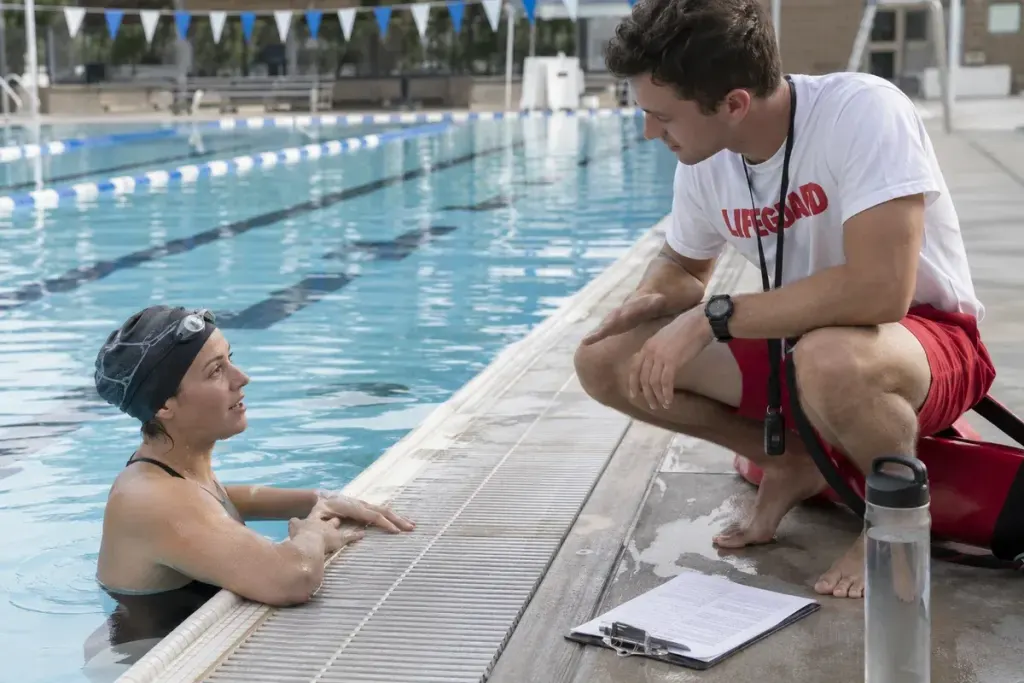
Check depth markings before choosing where to enter. Use designated entry points and follow diving rules. Make sure children and less confident swimmers have appropriate supervision; the presence of a lifeguard does not replace the responsibility of a supervising adult.
Do not swallow pool water, and follow public-health advice about staying out of the water when ill with diarrhoea. Showering and using toilet breaks are practical habits that support shared water hygiene. These actions reduce avoidable problems without requiring swimmers to become pool-treatment technicians.
- Look at the water and surroundings before entering.
- Read the rules and identify staff or lifeguards.
- Ask about unclear conditions instead of guessing.
- Choose another activity if concerns are not resolved.
A strong chemical smell, cloudiness or poor visibility should not be diagnosed from the poolside by a visitor. Staff need to investigate using the appropriate operating procedures. Avoid giving others confident explanations that you cannot verify.
Missing one swim is a small inconvenience compared with entering water you do not feel able to assess safely. A well-run facility should make it easy to raise a concern and understand what happens next, even when the answer is that the pool must remain closed.