
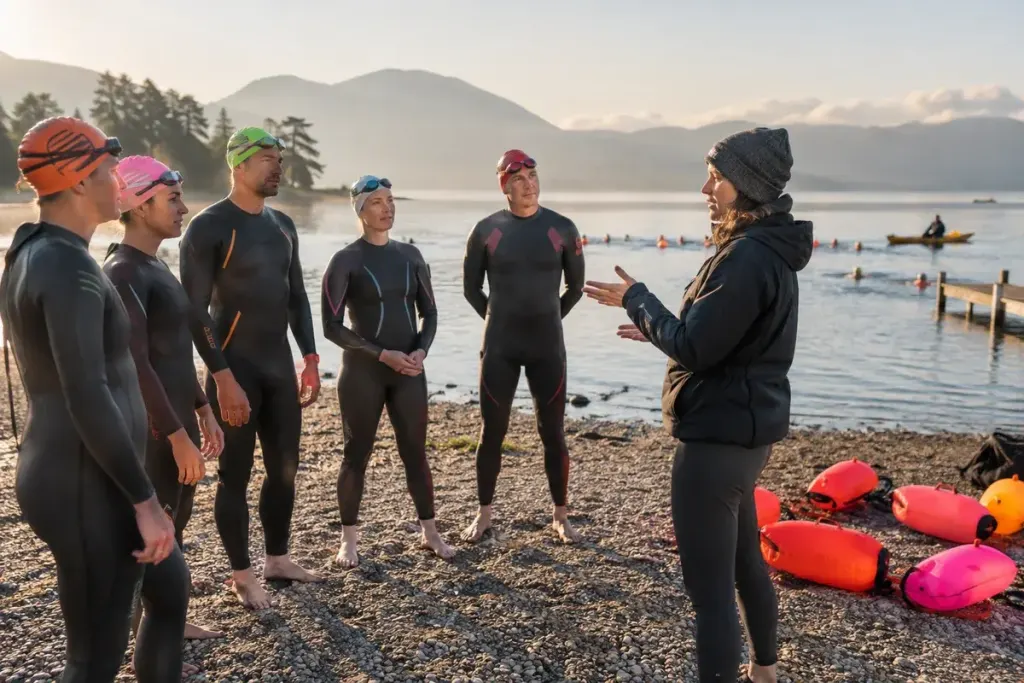
Swimming a comfortable distance in a pool can build confidence. Open water adds questions that lane swimming does not answer: temperature, visibility, moving water, entry points and how to get out.
Treat the first transition as learning a new environment, preferably with qualified instruction at a supervised location suitable for beginners.
Choose the setting before choosing the distance
Find out whether swimming is permitted and whether lifeguards or organised supervision are present. Check local conditions and advice, including water quality, weather, tides or currents where relevant. Identify a safe entry and exit before entering.
The RNLI’s open-water swimming guidance emphasises preparation, swimming with others and understanding the conditions. A familiar-looking stretch of water may have hazards that are not visible from the bank.
Expect temperature to change the experience
Cold water can affect breathing and movement. Enter gradually rather than jumping or diving straight in, and do not assume pool fitness prevents cold-water shock. The RNLI’s cold-water guidance explains why the initial response can be dangerous.
Discuss suitability with a health professional if you have a relevant condition or concern. Equipment such as a wetsuit is not a guarantee of safety, and a tow float is not a replacement for a lifejacket or supervision.
Make the first objective small
An introductory session can focus on getting in and out comfortably, orienting yourself and following the instructor’s plan. It does not need a distance target. Stay within the supervised area and your capability, with a companion or organiser who knows the plan.
Agree how the session ends and what signals mean stop. If conditions change or you feel unwell, leave the water safely and seek help. Do not continue because a watch says you have not completed the intended distance.
Prepare the minutes after the swim
Have dry clothing, shelter and a sensible way home ready. Keep belongings where they can be reached without an awkward climb or crossing. Tell the person expecting you when you are safely out.
Pool ability remains valuable, but the transition works best when it is paired with local knowledge and cautious progression. The useful first achievement is understanding the setting and completing a well-supported session—not proving that your pool distance transfers unchanged.