
The swim ends, the suit goes into a wet bag, and the bag stays in the car until tomorrow. A small change at this point can make the next session more pleasant: treat the wet bag as transport, not long-term storage.
Read the garment’s care label and manufacturer guidance. Fabrics, linings and decorative details vary, so a routine that suits one suit may not suit another. Chlorine-resistant does not mean that care instructions can be ignored.
For an example of manufacturer guidance, Speedo includes a care section with rinsing and drying advice. Apply the instructions supplied for your own garment rather than treating one brand’s guidance as universal.
Make unpacking part of the swim
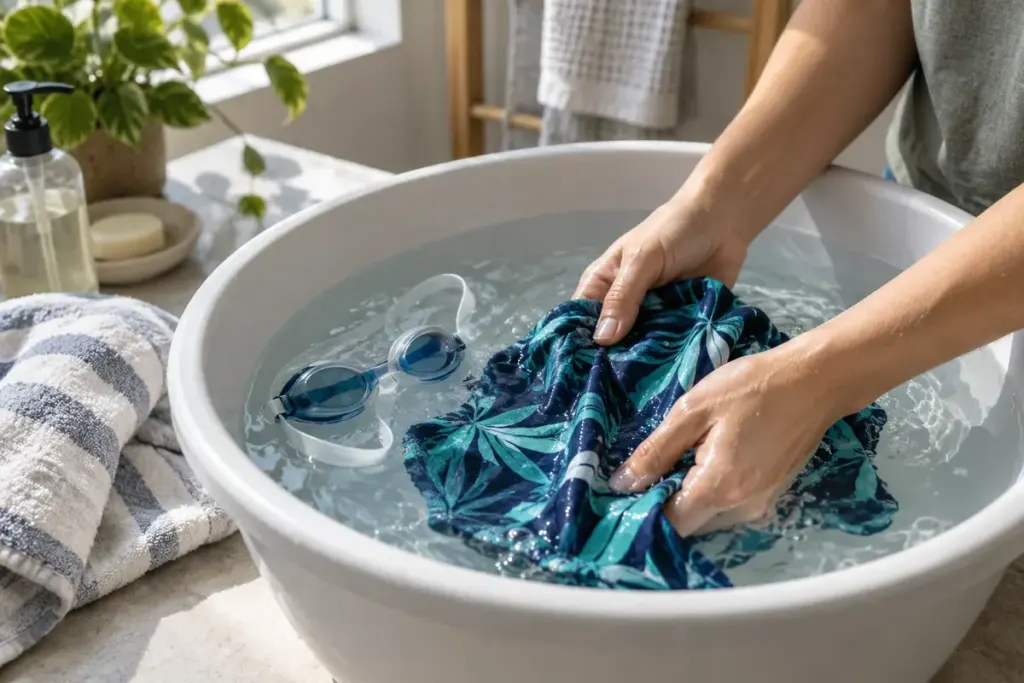
Remove the suit from the bag when you get home. Rinse or wash it as directed, using the recommended temperature and cleaning method. Avoid adding a strong cleaner or bleach because the fabric smells of the pool.
Handle the material gently. Follow instructions about squeezing, spinning or wringing rather than twisting it hard by habit. Check the lining and seams while the garment is in your hands, particularly where straps or fastenings take repeated strain.
Give it a suitable place to dry
Use the drying method specified for the garment. Keep it away from heat sources that the label warns against, and do not assume a radiator or tumble dryer is a harmless shortcut. Let the bag dry too, so the next clean item is not placed into a damp container.
If you swim frequently, think about the time between sessions before buying more kit. A second suitable suit may help a drying routine, but it does not replace unpacking and care. Start by making the existing routine workable.
For children or shared household laundry, put the care instructions where the person washing the suit can find them. The useful habit is straightforward: unpack, follow the label, dry appropriately and inspect. That keeps the equipment ready without turning ordinary swimwear care into an unnecessarily complicated project.