
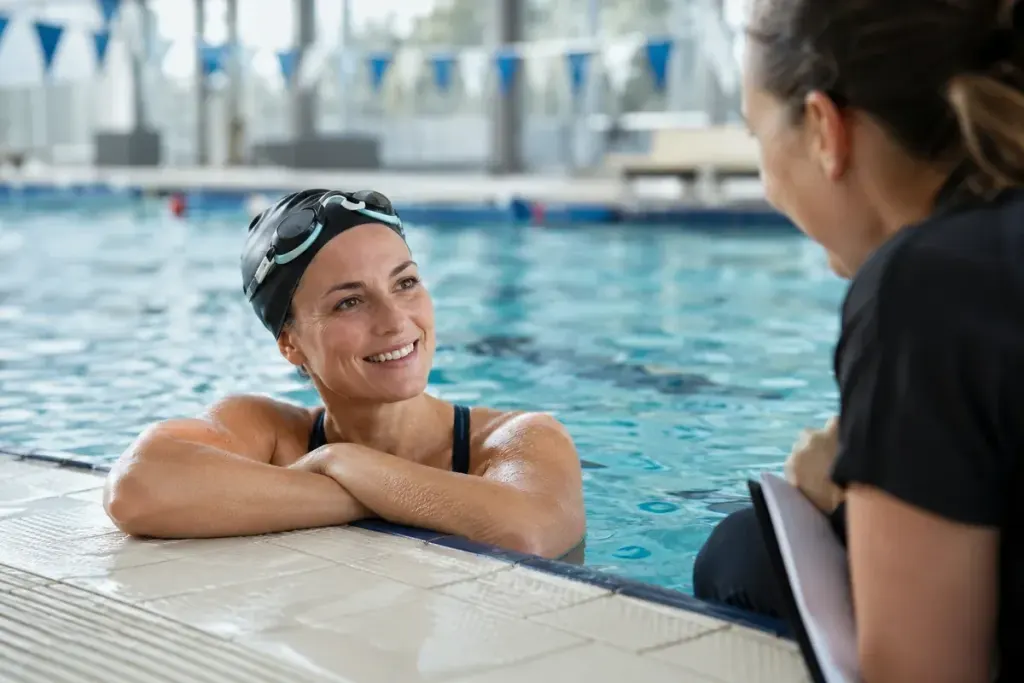
A learner completes one length comfortably and struggles through the next two to avoid looking tired. The extra distance may teach less than a short rest followed by another controlled attempt.
Agree the task before entering
With a qualified instructor, choose a manageable practice length, a safe resting place and the skill to focus on. The task might be a relaxed exhalation or a consistent body position, rather than completing as many lengths as possible.
At the wall, let the instructor know what happened: you lost the rhythm, became tense when turning to breathe, or felt the effort rise. A precise observation gives them something to adjust. “I am bad at swimming” does not identify the next useful exercise.
Restart with one cue
Take the rest you need and follow the instructor’s guidance. Try one clear correction on the next attempt instead of carrying a long checklist into the water. If the task remains too difficult, shorten it or use an appropriate progression under supervision.
Stop and seek help for dizziness, pain, unusual breathlessness or feeling unwell. Do not use breath-holding challenges or hyperventilation to prove that you can manage a longer distance. Fitness and water confidence are not substitutes for safe instruction.
In a shared lane, rest where facility rules and the instructor indicate, leaving space for other swimmers to turn. Tell the instructor if a crowded setting makes the exercise harder; that is relevant information, not an excuse.
After the session, write down the distance or task you could repeat with control and the cue that helped. Progress may mean the same distance with less tension and better consistency. The rest is part of the practice when it makes that next attempt possible.